Gorton Welcomes New Interns this fall
August 12, 2026
Five Kinds of Hobbies That Are Good for You – and Where to Find Them at Gorton
August 27, 2026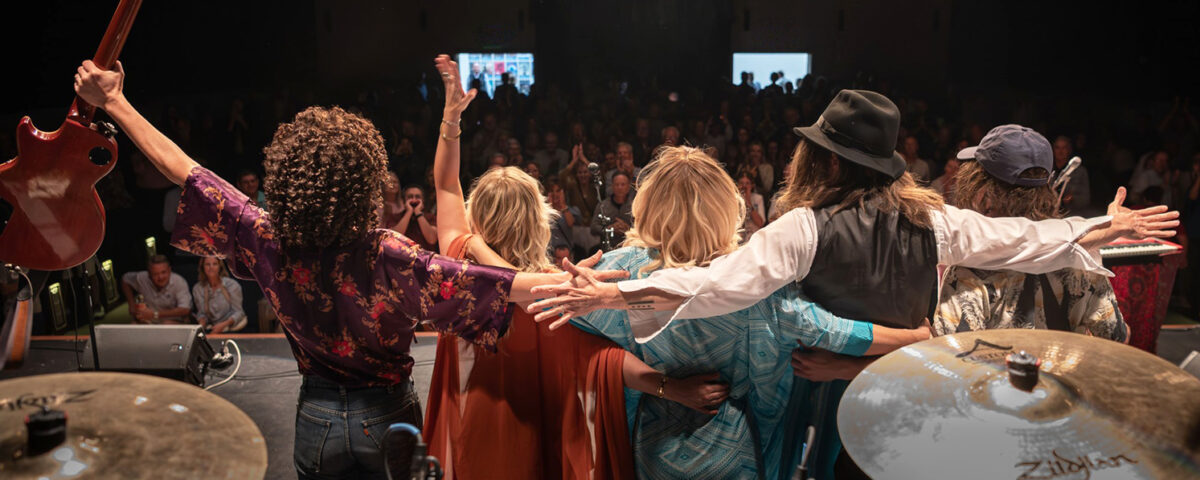
There’s a reason a room full of strangers singing the same song can feel like magic. It turns out our brains and bodies are built for it. We’ve always believed that live music and shared arts experiences bring people together. Now, two recent pieces of writing – one from a neuroscientist, one from a social psychologist – back that belief up with research. Here’s what we learned, and why it matters for how we gather, dance and create together.
Our Brains Crave the Crowd
In an essay for The Guardian, Harvard Medical School anesthesiologist Bala Subramaniam describes taking his kids to a Nick Jonas concert and unexpectedly experiencing what the 19th-century sociologist Émile Durkheim called “collective effervescence” – that electric, communal feeling that happens when a crowd moves and sings as one. We have experienced this here at Gorton for sure – one patron calls it “Gorton Magic” and will remark when he feels this happen.
Subramaniam explains that this state quiets the brain’s “default mode network,” the circuit responsible for planning, daydreaming and self-referential thought. A little quiet in that network is a good thing: too much of it is linked to rumination, and research shows people struggling with depression often can’t easily switch out of it. A concert, he argues, can be a circuit breaker. He also points to the loneliness epidemic as a serious public health concern – on par, according to former US Surgeon General Dr. Vivek Murthy, with the health risks of smoking. Subramaniam’s case: shared, in-person experiences like concerts and dancefloors deserve to be treated as public health assets, not just entertainment.
The Crowd Isn’t Losing Its Mind – It’s Finding Its Voice
A companion piece from Psyche takes on a common myth: that being in a crowd makes people less rational, more like a “mindless mob.” The research says otherwise. According to the social psychology reviewed in the piece, when people in a crowd share a social identity – fellow music fans, fellow fans of a team, fellow festival-goers – they experience real, meaningful support from the people around them. That support lets people do things they couldn’t do alone, and when those actions align with what the group values, the result is a genuine sense of empowerment, exhilaration and joy.
A review of research on live music audiences cited in the piece found that shared positive emotions at concerts create real feelings of unity and community. In other words, the joy you feel at a show isn’t a loss of self – it’s a meaningful, shared expression of who you are. The “Gorton Magic”!
Why This Matters to Us
At Gorton, we see this play out constantly: a packed house at a concert, a crowd swaying together at an outdoor event, families dancing side by side. The research confirms something we’ve always felt in our bones – that gathering together through the arts isn’t just fun. It’s good for us. So the next time you’re deciding whether to grab tickets to a show or participate alongside others in a class, remember: you’re not just watching a performance or demonstration. You’re taking part in something our brains and communities genuinely need.
You belong here.
Sources: Subramaniam, Bala. “I’m a Neuroscientist. Here’s Why Our Brains Need Pop Concerts.” The Guardian, August 14, 2026. “Being in a Crowd Doesn’t Make You Part of a Mindless Mob.” Psyche.