The Forgotten Pillar of Health Lives Here at Gorton
February 9, 2026
Creative Ways to Stay Connected and Inspired During the Winter Months
March 31, 2026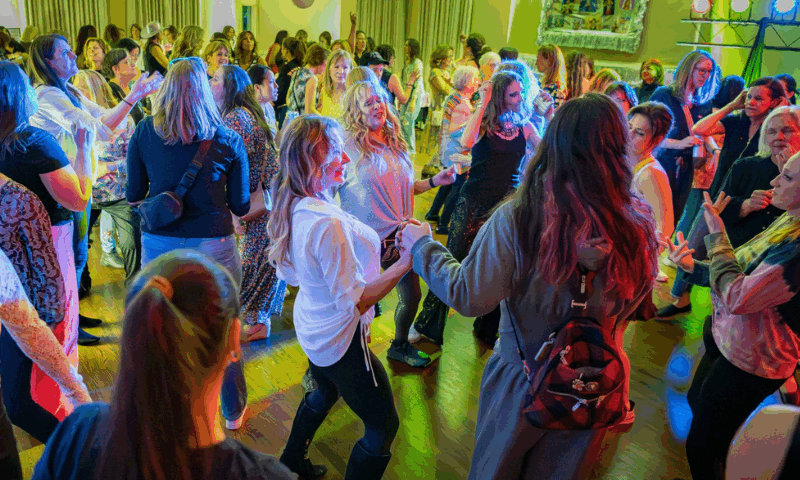
You don’t have to be a trained dancer to reap the benefits of hitting the dance floor. Whether you’re salsa-stepping in a community class, kicking through a line dance, or just letting loose at a ladies’ night out, dancing is one of the most enjoyable – and most effective – forms of exercise available. And the science backs it up.
Dancing Is a Full-Body Workout (That Doesn’t Feel Like One)
Most people don’t think of dancing as exercise. That’s exactly what makes it so powerful. When you’re caught up in the music, you forget you’re burning calories, building muscle and improving your endurance all at once.
The health benefits of dancing include:
- Reduced risk of cardiovascular disease
- Improved lung capacity and stamina
- Lower blood pressure and cholesterol levels
- Better weight management over time
- Increased muscle tone and flexibility
Best of all, it’s low-barrier. You don’t need a gym membership, equipment or a high fitness baseline. You just need to move.
The Mental Health Benefits of Dancing
Here’s where it gets really interesting. Dancing doesn’t just work your body – it actively rewires your brain.
According to Harvard Medical School, researchers began digging into the neurological effects of dance once they realized how much mental coordination it demands. A Columbia University neuroscientist described the pairing of music and movement as a “pleasure double play”: music lights up the brain’s reward centers while dance activates its sensory and motor circuits at the same time. Brain imaging studies have found that dance engages the motor cortex, somatosensory cortex, basal ganglia and cerebellum – the regions responsible for planning movement, coordinating balance and processing spatial awareness.
A landmark 2003 study published in the New England Journal of Medicine by researchers at the Albert Einstein College of Medicine looked at 11 different leisure activities, including cycling, golf, swimming and tennis, to see which lowered the risk of dementia in older adults. Dance was the only one that did. Researchers believe that’s because dancing combines mental effort with social interaction, engaging the brain in ways that more repetitive forms of exercise simply don’t.
Beyond cognitive protection, dancing has been shown to:
- Reduce stress and help ease anxiety
- Boost serotonin, the neurochemical behind mood regulation and feelings of reward
- Strengthen neural connections involved in memory, spatial recognition and decision-making
- Improve body image and self-esteem, particularly in group or social dance settings
It’s hard to feel bad about yourself when you’re moving to a song you love.
Dance Is Even Being Used as Medicine
Dance’s effect on the brain is powerful enough that it’s now used to help treat Parkinson’s disease, a progressive movement disorder that affects more than a million people in the U.S. As Dr. Daniel Tarsy, a Harvard Medical School professor of neurology, put it, “There’s no question, anecdotally at least, that music has a very stimulating effect on physical activity, and I think that applies to dance as well.”
One technique, known as rhythmic auditory stimulation, has patients move to a steady beat, and studies show it leads to real improvements in gait and coordination. It’s a reminder that the rhythm on the dance floor isn’t just fun – for some, it’s therapeutic.
Social Dancing Is Especially Good for You
Plenty of exercise is good for your health. But social dance – the kind you do with other people, in a shared space, to music you all enjoy – adds another layer of benefit that a solo session simply can’t match. The synchronized motion, the eye contact and the shared rhythm all build social bonds and help create a heightened sense of connection and belonging.
For older adults especially, social isolation is one of the most significant threats to long-term health. Regular group dancing combats that directly, offering a built-in community and a reason to get out of the house each week. It also improves balance and coordination, both of which decline with age and contribute to fall risk. Put simply, dancing with other people is one of the best things you can do for your overall well-being.
Ready to Get on the Dance Floor? Gorton Center Has You Covered
If you’re in the Lake Forest or North Shore area and looking for a place to experience the health benefits of dancing firsthand, Gorton Center has several events on the calendar worth knowing about:
- Ladies Night Dance Party – This is a women-only event (ages 21+) where the DJ spins, the dance floor fills up and you’re home by 10 pm. It’s held in the Grotto, a cozy, electric atmosphere with no judgment and no pressure. Just great music, great company and all the endorphins you could want. Tickets are $30.
- Salsarobics – This cardio-dance class blends salsa-style movement with a full-body aerobic workout. It’s the kind of class where you stop counting the minutes because you’re too busy having fun.
- Line Dancing – Join us for a community event that’s perfect for newcomers and seasoned steppers alike. No partner needed. No experience required. Just show up, follow along and let the music carry you.
- For children, check out the classes at the Fitzpatrick School of Irish Dance, which take place at Gorton.
These events are all recurring, so take a look at our calendar of upcoming events to see when it’s time to hit the floor.
Dancing is good for your heart, brain, mood, balance and social life. It’s accessible, adaptable and fun. When exercise feels like something you get to do instead of something you have to do, you’re far more likely to keep doing it. So find your style, find your people and find a dance floor.
Gorton Center is a nonprofit center for the arts and a gathering place at the heart of Lake Forest, Illinois. We offer a wide range of classes, professional live music and events, and film screenings for all ages. Help us provide vibrant social experiences and exceptional arts and culture by supporting our work today!
You belong here.
Source: Scott Edwards, “Dance on the Brain,” Harvard Medical School